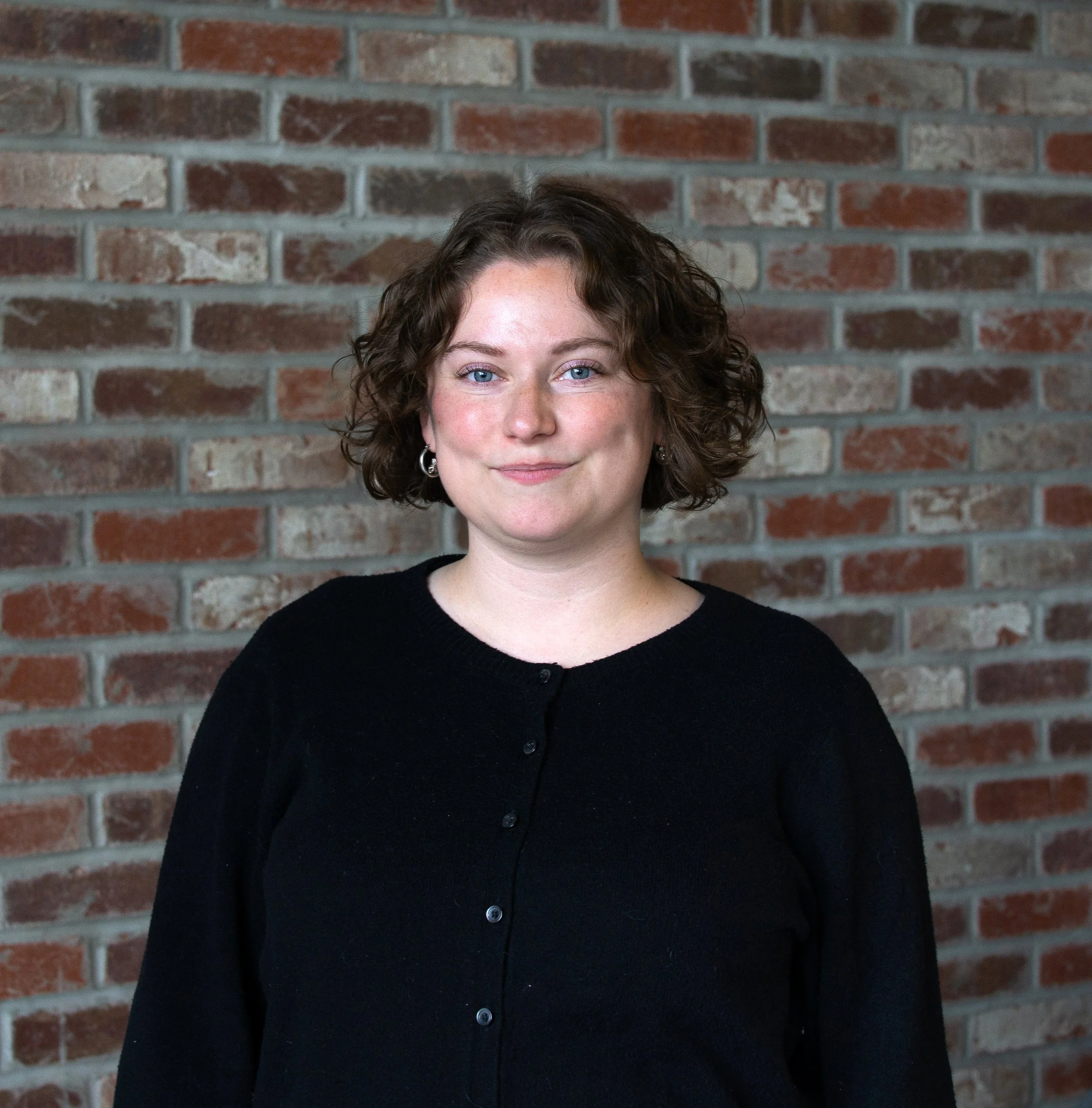
Bio
Jamie Westermeyer is a figurative ceramic sculptor. She received her BFA in Ceramics from Missouri State University and her MFA in Ceramics from the School for American Crafts at Rochester Institute of Technology in 2026. Formerly Head of Studio at Clayroom in San Francisco, she brings years of experience in ceramics education, community programming, and artist support.
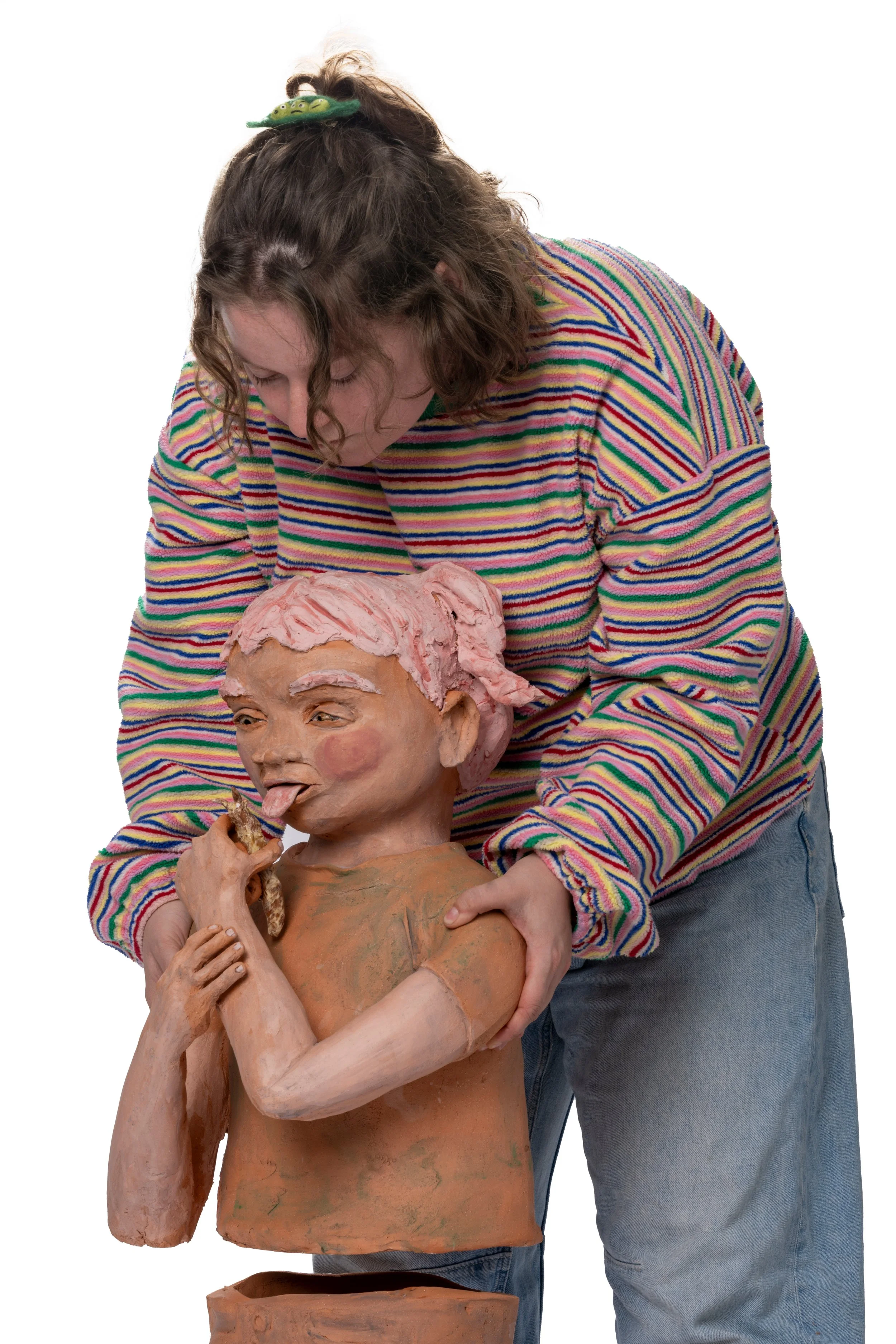
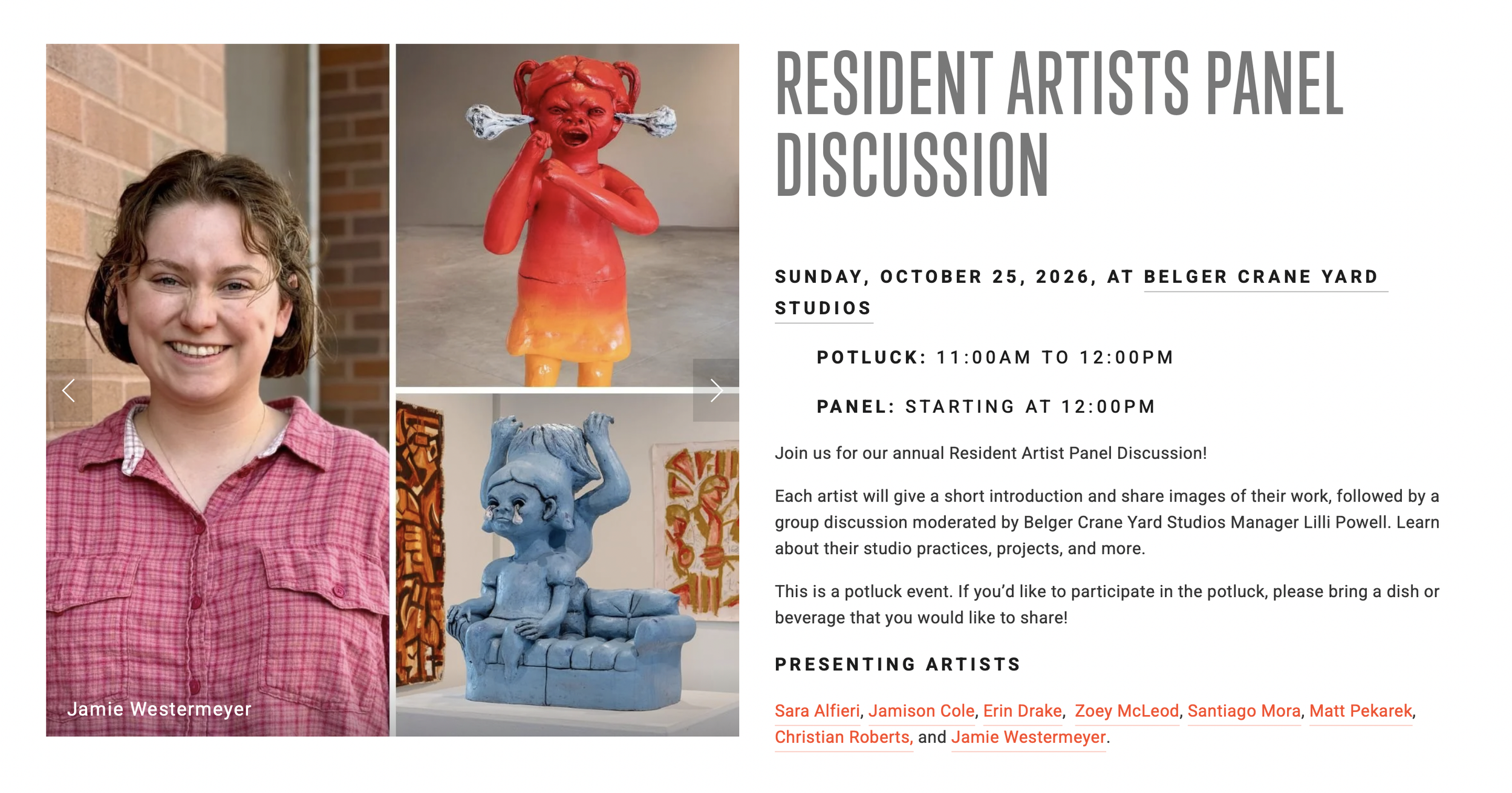
Her narrative-driven sculptural work examines girlhood, domestic environments, and the subtle systems of power that shape how women are taught to move, soften, endure, and perform. Using exaggeration and shifts in scale, she transforms familiar objects and figures into charged scenes that balance playfulness with tension. Her work often draws from personal memory, using clay as a material of both vulnerability and defiance.
Her work has been exhibited nationally and internationally, including in New York, California, Missouri, Ireland, and China. Alongside her studio practice, Westermeyer has taught ceramics in university and community studio settings and is committed to creating accessible, curiosity-driven learning environments.
Westermeyer is currently one of the Foundation's residents at Belger Crane Studios in Kansas City, Missouri.
Contact: WestermeyerCeramics@gmail.com
Instagram: @WestermeyerCeramics
Artist Statement
Clay is a material of memory. It records every squeeze, hesitation, and adjustment. Once fired, those actions are fixed—no longer flexible, only able to endure or fracture. I sculpt ceramic figures because clay records touch the way bodies record experience.
My work examines how sensitivity, attentiveness, and emotional labor are learned over time. Sensitivity, often mistaken for empathy, is cultivated through vigilance and anticipating the needs and moods of others before they are spoken. Girls are taught to anticipate, accommodate, and carry what isn't theirs. Those lessons accumulate through repetition—in praise, correction, and the quiet expectations that shape how women learn to care for others before themselves. Nothing disappears. It settles into the body.
Childhood appears throughout my work not as innocence, but as rehearsal. Drawing from both personal and collective experience, I create figures that inhabit moments where invisible pressures become visible. Their bodies compress, stretch, and strain under expectations that are rarely spoken but deeply felt, revealing the accumulated weight of continual adjustment.
I think about absorption as both an action and a condition. We absorb the moods of a room, other people's needs, and responsibilities that were never ours to carry. Over time, those accumulations shape posture, gesture, and identity. The body remembers every adjustment.
Clay does too. Every fingerprint, collapse, repair, and distortion remains part of the finished sculpture. Nothing can be erased; every decision becomes part of the final form. The finished figure carries the record of everything it has endured.